Whether it was the MGNREGS or the NFSA or the Aadhaar-based DBT scheme for cash transfer, the Modi government has built on the basic architecture created by the Singh government. Policy makers in the Modi government, instead of discarding them as products of the previous political regime, worked on them, expanded their scope and reach, and used new tools to improve their performance, explains A K Bhattacharya.

In a significant move, the government said it will allow grains-behemoth Food Corporation of India to borrow money from the market, Finance Minister Jaswant Singh said on Friday.
'We are not asking for incentives, but at least taxation can be aligned such that the rupee tax on consumers remains the same.'

Of these 212 million Indians, 133 million have untreated diabetes. Undiagnosed diabetes has been linked with complications such as diabetic retinopathy which can cause vision loss and blindness.

At a time when Flipkart has entered the quick-commerce race with a service called "Minutes", executives at rival players said they are in a wait-and-watch mode. They said they would be concerned only once the e-commerce firm is able to succeed in this space. The Walmart-owned firm's quick-commerce service has gone live in some parts of Bengaluru, putting it in competition with firms such as Zepto, Swiggy's Instamart, and Zomato's Blinkit.

The WTO has resumed work at Geneva from September 1 after a month long vacation.

The combined fertiliser, food and petroleum subsidy budgeted estimate for FY19 is Rs 2.64 trillion, while the revised estimate is Rs 2.66 trillion. If the carrying forward to FY20 does not happen, the revised estimates for the major subsidies could actually cross Rs 3 trillion for the first time ever.

Modi emphasised on deeper India-Africa partnership on clean energy.
Fifty-six months on, the government's record in implementing these schemes and projects has been mixed, report Arup Roychoudhury and Indivjal Dhasmana.

'The signal is crude oil prices will rise, I am cutting my subsidy. Be prepared, prices will rise.'

Senior policymakers say it is a tough task and the finance ministry may resort to the time-tested method of carrying forward part of the subsidy payment burden to the next fiscal year.

Schemes like the Mukhyamantri Majhi Ladki Bahin Yojana strain fiscal resources amid rising unemployment and prices of food items.

In what could come as a piece of good news, hunger in India - as measured by the Prevalence of Undernourishment (PoU) by the United Nation's Food and Agriculture Organisation (FAO) - has come down from 16.6 per cent of the population in the 2020-2022 to 13.7 per cent in 2021-23, the latest report on the State of Food Security and Nutrition in the World (SOFI 2024) showed. This means that around 39.3 million people have come out of undernourishment between the two periods, NITI Aayog member Ramesh Chand said on Tuesday.

Since the food subsidy is almost Rs 1,000 per person per year, there is a need for complete re-engineering of the existing public distribution system so as to ensure each and every grain reaches the right beneficiary, he said.

'I am optimistic about the Budget because of the fiscal discipline the government has committed to.'
The Economic Survey on Thursday prescribed reforms in the subsidy regime in oil, food and fertiliser sectors and asked the government to review the possibility of direct cash transfer to the targeted people.
Economy is now turning around, manufacturing appears to be on revival, says FM.

Milk supplies could improve with the monsoon, provided the rains are not excessive.

The government on Friday asked the Comptroller and Auditor General (CAG) to suggest ways to curb its rising subsidy bill on food, fertiliser and petroleum products without hurting the targetted population.
With crude oil prices nearing $100 a barrel, Prime Minister Manmohan Singh on Thursday expressed concern over mounting subsidies in petroleum as also food and fertiliser sectors, with discounts exceeding Rs 1,00,000 crore (Rs 1,000 billion) this year. The prime minister asked his Cabinet colleagues and the Planning Commission to "reflect what these mean for our development options and what development options these subsidies are shutting out".
This is a formidable task which the Centre may find hard to shoulder without substantial involvement of the states.

Riniki Bhuyan Sarma, the wife of Assam Chief Minister Himanta Biswa Sarma, has filed a Rs 10 crore defamation suit against Congress MP Gaurav Gogoi for 'false' allegations of irregularities in a food processing project.

The government has exhausted only 39 per cent of its fiscal deficit target in the first half of FY24.

Subsidy bill on food, petroleum and fertilisers is estimated at Rs 1,79,554 crore.

After prospects of a higher subsidy outgo on food and fertilisers, the government is faced with the spectre of a higher petroleum subsidy. Rising crude oil prices and its inability to increase fuel prices is all set to spoil the government's subsidy calculations. The country meets 80 per cent of its crude oil demand through imports.
Asserting that the government will never compromise on agriculture subsidies, Finance Minister Jaswant Singh said he is not in favour of "industrial agriculture" as it could put at stake the food security of 100 crore people in the country.
World Bank economists have urged the Indian government to cut unproductive farm subsidies and utilize agriculture spending the most productive manner.
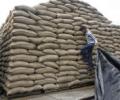
Government's cheap food distribution covers 68 per cent of the population.

This will, of course, go a long way in meeting the promised fiscal deficit target of 3.6 per cent of GDP in 2015-16.
The Kelkar Committee has recommended sharp reduction in subsidies on petroleum, food and fertiliser, which the government said was contrary to its policy of protecting the poor.
.jpg)
A higher subsidy burden and lower growth will weaken the country's fiscal metrics, analyst Atsi Sheth said in the presentation.

Commerce minister makes strong case for food subsidy to poor.

1.46 lakh such consumers have voluntarily given up the subsidy.

Some UTs to start from April 1 and other transfers to be launched from January.
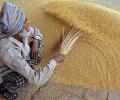
India's opening stocks of wheat in the central pool are expected to be 19.5-20 million tonnes as on April 1, 2022, the lowest in the last three years, but much higher than the normative level required for maintaining a buffer and strategic reserve, trade and market sources said. In accordance with the buffer and strategic reserve norms, India should have a wheat stock of 7.5 million tonnes in the central pool as on April 1 each year and this year's stocks, though the lowest in the last three years, will still be over 160 per cent more than what is required. On the export front, both government and trade sources are unanimous that this year (FY22) they will be 7-7.25 million tonnes, a record, while in the next financial year, they might touch even 10 million tonnes if the current momentum is maintained.

Finance Minister Nirmala Sitharaman on Thursday announced a new job creation scheme by giving subsidy to those establishments that make new hires. The subsidy would be to cover for retirement fund contributions by employees as well as employers for two years, she said. Employees contribution (12 per cent of wages) and employer's contribution (12 per cent of wages) totalling 24 per cent of wages would be given to establishments for two years, she said. Under the Aatmanirbhar Bharat Rozgar Yojana, every Employees' Provident Fund Organisation (EPFO)-registered establishment taking new employees would get this subsidy.
In a big boost to farm sector, Finance Minister P Chidambaram proposed a whopping Rs 1.25 lakh crore increase in agri-credit target for next fiscal at Rs 7 lakh crore and raised allocation to the ministry by a handsome 22 per cent.
